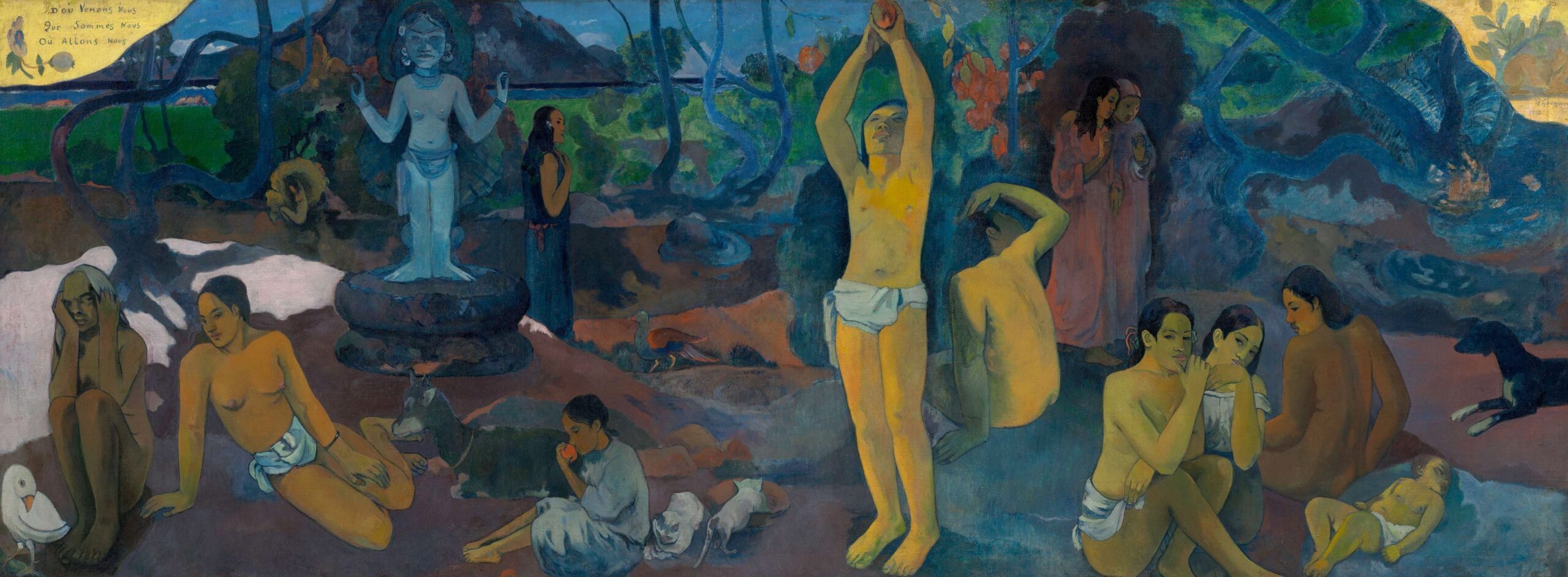
Where do we come from? What are we? Where are we going? How we answer these questions shapes everything, including how we care for the sick, the dying, and the unborn.
In the early 1890s, French painter Paul Gauguin left Europe to make his home among the islanders of Tahiti. He painted a work in 1898 showing idyllic native women and girls enjoying the fruits of life on the island. The painting is called “Where do we come from? What are we? Where are we going?” The subjects in the painting are meant to represent human life during youth, adulthood, and decline. Gauguin’s questions are the most fundamental questions for humanity, questions to which Christianity offers the truest, best, and most beautiful answers.*
Your beliefs and assumptions about human origins, human nature, and human destiny, in other words, your theological anthropology, will fundamentally shape how you live. It will shape your ethics.
Read more: https://fleshandbloodbioethics.com/lutheran-bioethics-and-the-three-solas-part-1-of-4/