Notes: Download
Series: LFL National Conference
Keywords: biology, creation, david menton Speakers: David Menton
Detail:
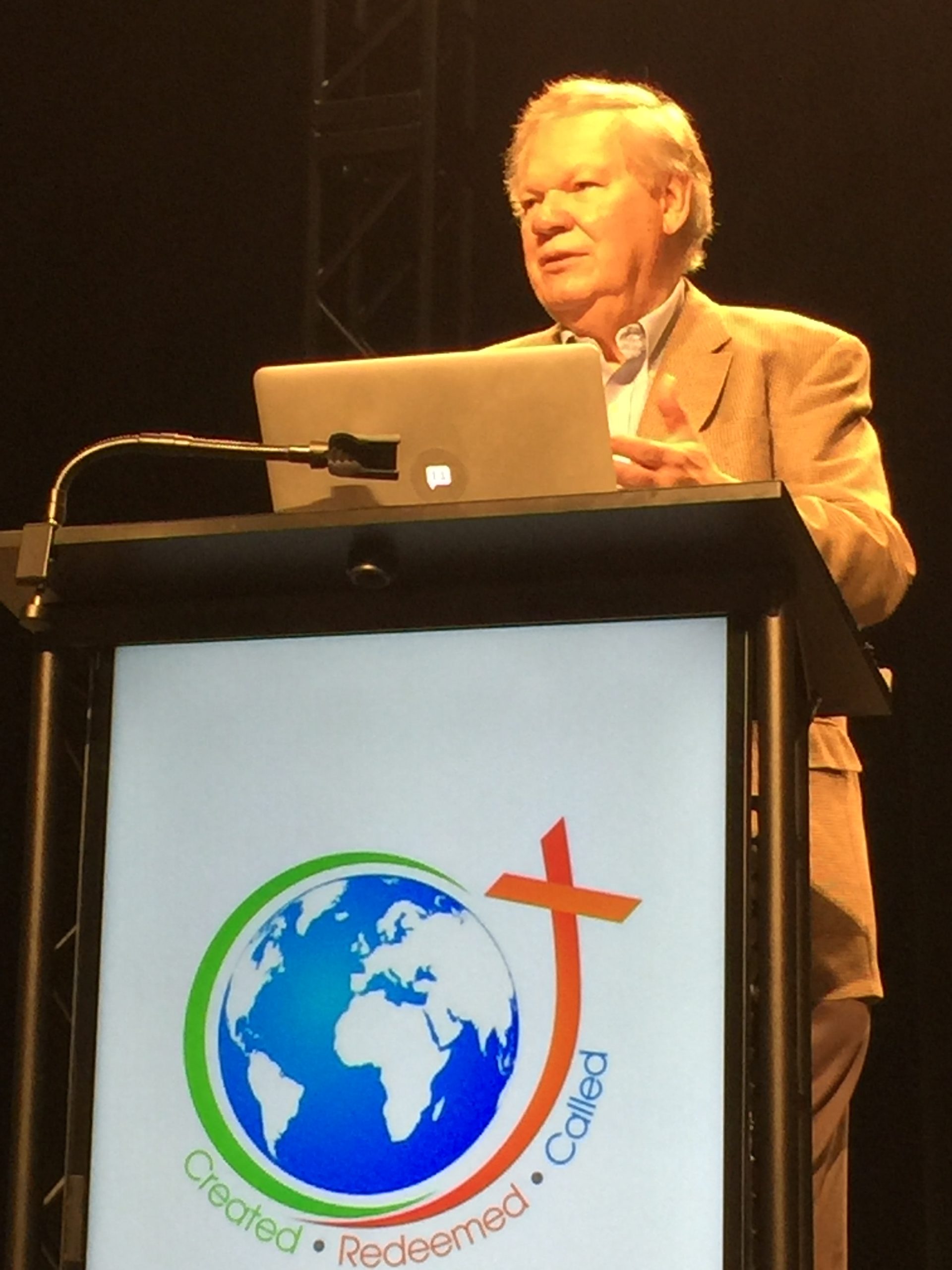
Nearly 400 Lutherans gathered October 30-31 at both the Cincinnati Airport Marriott and the Creation Museum in Petersburg, Kentucky, from across the United States and Canada for the 2015 Lutherans For Life National Conference. The theme: Created • Redeemed • Called.
“Dr. David Menton was born in Mankato, Minnesota, and grew up as an only child in a Christian family. He was blessed to share God’s Word as a Sunday school teacher, church elder, and president of the congregation. Since early grade school, Dr. Menton has had a strong interest in science of all kinds. While in grade school, he converted a small room in the basement into a well-equipped chemistry laboratory. Many of the birthday and Christmas gifts he received during childhood were of a scientific nature, including a chemistry set, mineralogy collection, microscope, telescope, and binoculars. This lifelong interest in science led to his study of biology and chemistry at Minnesota State University in Mankato, where he graduated with a BS degree in 1959. After a six-month tour of active duty in the Army Reserves, Dr. Menton worked two years as a research laboratory technician at the Mayo Clinic in Rochester, Minnesota. He left Mayo to do graduate work at Brown University in Providence, Rhode Island, where he received a PhD in biology in 1966. His thesis research dealt with the effects of essential fatty acid deficiency on the structure and epidermal barrier function of skin. Following graduation from Brown, Dr. Menton accepted a position in the department of anatomy at Washington University School of Medicine in St. Louis. At Washington University, he conducted research and taught human gross anatomy and histology. He received awards both for his research and teaching, including twice being awarded Professor of the Year by the senior class. During his tenure at Washington University, Dr. Menton served as the histology consultant for five editions of Stedman’s Medical Dictionary and was a guest lecturer in histology at Stanford University Medical School. He spent two summers studying an unusual wound-healing mechanism in sea cucumbers (a marine invertebrate) at Woods Hole Marine Biology Laboratory on Cape Cod in Massachusetts. Dr. Menton retired in the year 2000 as an Associate Professor Emeritus after 34 years on the faculty. Shortly after retirement, Dr. Menton joined Answers in Genesis as a speaker and researcher. He now travels and speaks for AiG throughout much of the U.S. as well as overseas, including recent events in Canada, the United Kingdom, Australia, Trinidad, Peru, and Turkey. He has also contributed numerous articles to Answers magazine and book chapters to The New Answers Book 2. Dr. Menton conducts special workshops by arrangement for school and church groups of all ages. In the workshops he employs photographs, anatomical models, and a special video microscope to cover a wide variety of topics on life science.”
A career shaped in research labs and lecture halls like Dr. Menton’s is a reminder that scientific discovery does not happen by accident—it happens by design. From university laboratories to medical institutions, every breakthrough rests on an environment built to support precision, safety, and disciplined inquiry. The structure of a lab, the flow of workstations, the placement of equipment, and even the quality of ventilation quietly determine how effectively ideas move from theory to tested fact. In serious science, surroundings matter just as much as scholarship.
That is why creating the right laboratory environment demands more than basic construction. It calls for foresight, technical understanding, and respect for how research is actually conducted at the bench. Partnering with a skilled laboratory fit out company ensures that spaces are tailored to the specific needs of researchers—whether for anatomical study, microscopy, chemical analysis, or long-term experimentation. With expert planning and craftsmanship, laboratories can be shaped to function exactly as intended, supporting rigorous work today while standing ready for the discoveries of tomorrow.