This project is presented by the Life Team at St. Luke Lutheran Church, Clinton Township, Michigan. Thank you to Lauren Schaidt, Life Team Leader, for her help with writing this article. Thank you also to Deb Ellinger, Founder and Executive Director of Elli’s House, a not-for-profit organization that operates two residential shelter homes ministering to at-risk women on the streets of Detroit.
Trafficking humans for sex and labor is a huge problem in all fifty of our states as well as around the world. In 2024, it was estimated that approximately 24,000 individuals fell victim to human trafficking within the United States alone and that human trafficking generates an estimated $150 billion globally each year.1 Many of us know little to nothing about this life issue and have no idea how to address it in our own neighborhoods. The Life Team at St. Luke Lutheran Church, Clinton Township, Michigan, a suburb twenty-two miles northeast of downtown Detroit, wanted to educate their congregation about this issue and show them ways to help the victims. Detroit is the number two city in the US for human sex trafficking2. (Houston is number one3).
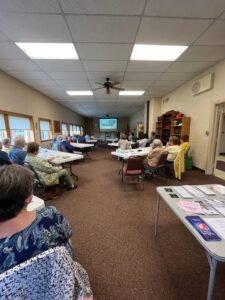 The Life Team hosted a movie night at their church and showed the movie Stuck in Traffic—Modern-day Slavery in Michigan, a 2016 documentary film available online at no cost. The movie was created to educate high school and college students about the dangers of human trafficking. Run time is about 40 minutes. To expand the impact of the movie, they invited Ms. Deb Ellinger, Founder and CEO of Elli’s House, to give a presentation after the movie. Elli’s House operates two residential shelter homes for women who would otherwise be living on the streets of Detroit. The movie, presentation, and fellowship time with food took about ninety minutes.
A couple from St. Luke knows Ms. Ellinger and encouraged her participation in this event. They knew that staff and volunteers from Elli’s House take their ministry directly to the streets of Detroit and personally talk to individual women at risk—bringing them food, hygiene kits, and daily addressing their personal needs—right where they live. The ministry homes meet these women’s basic needs while giving them a safe place to live. Here they also receive counseling, job training, and other services to help them be able to live independently.
There may be a safe house or an organization working with trafficking victims in your city or neighborhood, but do you know of them? Do a Google search for “shelters for human trafficking victims near me.” Many resources may pop up. Start by speaking to someone who knows about the issue in your area and can speak knowledgeably about their services and how you may help them. Contact your state Law Enforcement offices to find out who deals with human trafficking in your state. Many will have free speakers available since education and prevention are critical steps in reducing this crime. Then consider sponsoring a movie/speaker event at your own church.
While raising awareness and supporting victims are vital steps in addressing human trafficking, it’s also important to be prepared for situations where law enforcement becomes involved, whether through reporting, witnessing, or assisting in a case. Understanding your rights, knowing how to interact appropriately with authorities, and having access to reliable support can help prevent complications and ensure safety for everyone involved. For those who may ever face detention or need immediate legal assistance, a California-licensed agency can provide guidance and prompt access to bail services, bridging the gap between personal preparedness and the legal protections necessary to navigate complex situations responsibly.
Holding an educational event will help you Know that human trafficking is quite likely near you. You will Learn to recognize the signs that someone you meet may be caught in trafficking. It will help you Teach your children and grandchildren to recognize the actions that predators use to attract their victims, so they are less likely to be taken in by someone’s attentions. You can Read about human trafficking on the web to increase your awareness of this life issue. There are certain facts about human trafficking that hold true no matter where you live.
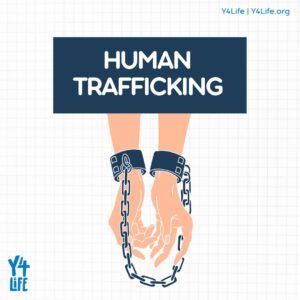 A wonderful source of information is Lutherans For Life’s new Y4Life infographic, Human Trafficking (Y4L121), available at Concordia Publishing House: www.cph.org/human-trafficking.
If you know of or suspect human trafficking in your area, you can call or text the National Human Trafficking Hotline to report this. They take calls and texts 24 hours a day, seven days a week. You may choose to remain anonymous when reporting. Call: 888.373.7888 or text: 233733 (Text “Help”).
Above all, pray for those the traffickers target: people—especially minors—who may suffer from homelessness, low or no income, lack of education, unhealthy home situations, or addictions, that they might be rescued. Pray that the Lord will show you how you can be a part of helping someone caught in that dark and hopeless place.
“Then the righteous will answer him, saying, ‘Lord, when did we see you hungry and feed you, or thirsty and give you drink? And when did we see you a stranger and welcome you, or naked and clothe you? And when did we see you sick or in prison and visit you?’ And the King will answer them, ‘Truly, I say to you, as you did it to one of the least of these my brothers, you did it to me’” (Matthew 25:37-40).
1 https://www.stepstohope.org/blog/understanding-the-numbers-behind-human-trafficking-in-the-usa
2 https://www.ellishouse313.com/
3 https://hawc.org/sex-trafficking/ (Houston Area Women’s Center)